



Yes, for most 6-year-olds, they are worth it. A sealant costs about $30-$60 per tooth in a private dental office in the USA in 2026, it takes a few minutes per tooth, it does not hurt, and it can prevent up to 80 percent of cavities in back teeth for 2 years. For most families with dental insurance, Medicaid or CHIP, it costs nothing out of pocket at all, because sealants are usually covered as preventive care for children.
- What a sealant is, and why the chewing surface is the weak spot
- Why age 6 is the window, and why six-year molars get missed
- How well they work
- What they cost, per tooth and per set
- Who pays: private insurance, Medicaid and CHIP
- What the appointment looks like, step by step
- Safety and BPA
- When sealants are not the right call
- The bottom line
- Frequently asked questions
That is the short answer. The rest of this guide is for the parent who wants the detail behind it: what a sealant actually is, why age 6 is the window, how well they work, what they cost per tooth, who pays, what the appointment looks like, whether they are safe, and when they are not the right call. Parents searching for dental sealants kids age 6 usually ask three things, is it worth it, what does it cost, and who pays, and this guide answers all three on one page.
One line to hold through the whole guide: sealants are cheap, painless and proven, and for most 6-year-olds they are worth it, but they protect only the chewing surface, and they are not a substitute for brushing, flossing and fluoride.
What a sealant is, and why the chewing surface is the weak spot
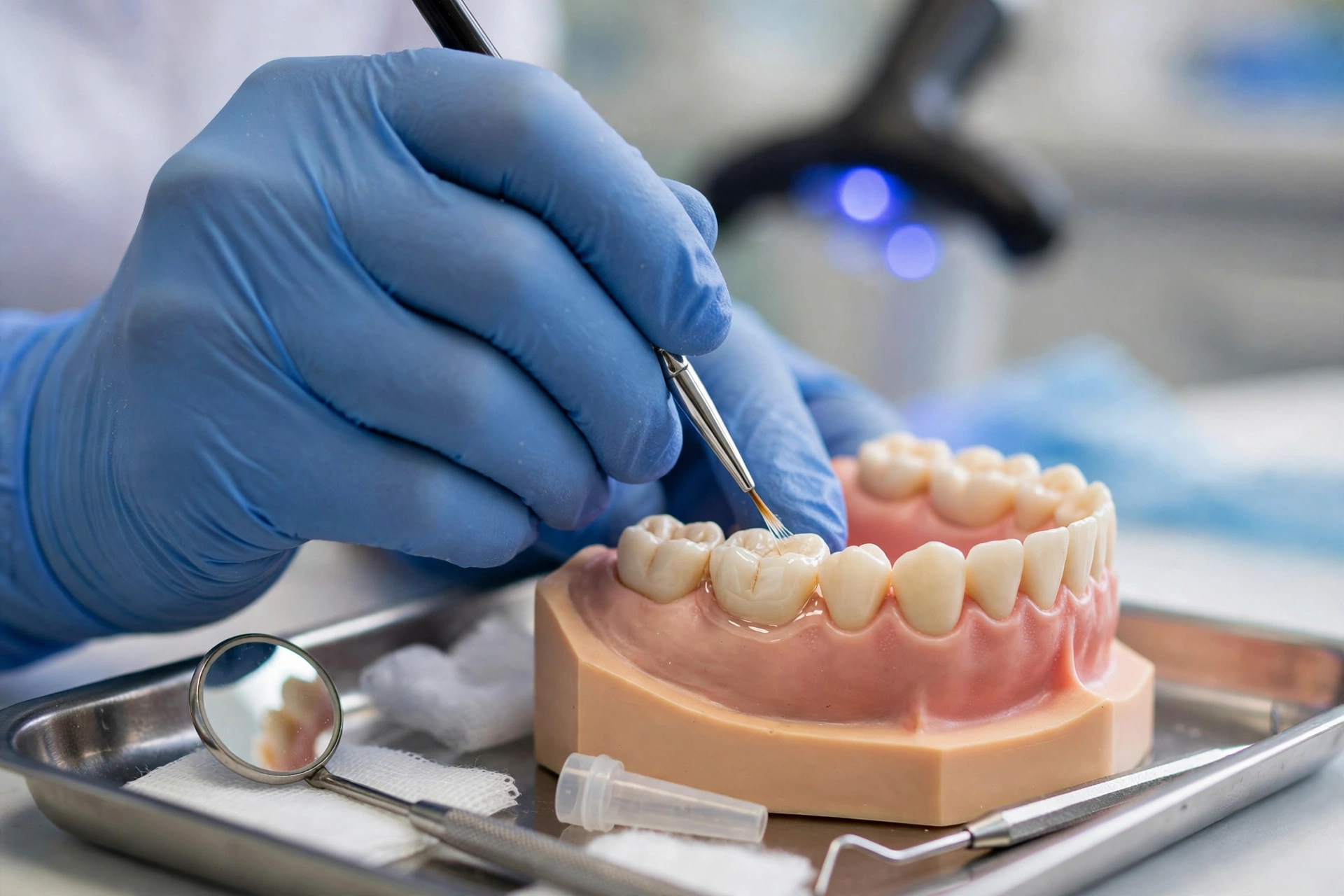
A sealant is a thin plastic resin coating painted on the chewing surface of a back tooth. It flows into the pits and fissures, the tiny grooves and valleys on top of a molar, and hardens into a smooth, clear or tooth-coloured shield. Food and bacteria can no longer settle into those grooves, because the grooves are filled in. That is the whole idea, and it is a physical barrier, not a chemical one.
A sealant is not a filling. A filling replaces tooth that decay has already destroyed, after drilling. A sealant is placed on a healthy tooth, before decay starts, and no drilling is involved. A sealant is also not fluoride varnish. Fluoride varnish is a sticky coating painted on all the teeth to strengthen enamel against decay, and it matters for general caries prevention, but it does not fill the grooves on a chewing surface. The American Dental Association recommends sealants rather than fluoride varnish for sealing the chewing surfaces of molars, and fluoride varnish for the rest of the mouth. The two work together, and neither replaces the other.
The chewing surface is the weak spot because of its shape. The top of a molar is not flat. It is folded into deep, narrow grooves that a toothbrush bristle cannot reach into, and that is where plaque collects and decay starts. In children, most cavities in back teeth start in those grooves, not on the smooth sides of the tooth. Brushing helps, and fluoride helps, but neither can clean the bottom of a groove that is narrower than a bristle. A sealant fills the groove so there is nothing left to clean.
Sealants protect only the chewing surface they cover. They do nothing for cavities between teeth, where floss matters, or along the gumline, where brushing matters. A sealed tooth can still get a cavity between the teeth, and an unsealed tooth next to it can still decay. That is why sealants are one part of prevention, not the whole of it, and why the dentist will still talk about brushing twice a day with fluoride toothpaste, flossing, and regular checkups.
Why age 6 is the window, and why six-year molars get missed
First permanent molars, often called six-year molars, usually come in around age 6 to 7. Second permanent molars usually come in around age 12. Sealants work best soon after a permanent molar has fully erupted, before decay starts, because newly erupted enamel has not fully hardened yet, and the grooves are deep and sharp. The first few years after a molar appears are the years when it is most at risk, and also the years when a sealant does the most good.
Six-year molars are easy to miss, and that is the trap. They arrive behind the baby teeth, at the very back of the mouth, without any baby tooth falling out first. A parent watching for a gap in the front of the mouth will not see them, and a child will not usually feel them arriving. Many parents do not realise a permanent tooth has appeared at all until the dentist points to it at a checkup, and by then months may have passed since it erupted. The age 6 window is easy to miss for exactly that reason, and it is worth asking the dentist at every visit from age 5 onwards whether the first permanent molars have arrived.
Sealants are not only for age 6. They can also be placed on primary molars from about age 2 to 3 for children at higher decay risk, and on premolars, the smaller back teeth that come in later. The age 6 window is the first big one, because the first permanent molars are the first permanent back teeth a child ever gets, and they have to last a lifetime. The age 12 window is the second, when the second permanent molars arrive. A child who missed the age 6 window can still be sealed at 7, 8 or 9, as long as the molar is healthy, but the earlier the better, because every month without a sealant is a month when decay can start in an unprotected groove.
How well they work
The numbers are strong, and they come from the CDC and the American Dental Association, not from a clinic brochure.
The CDC says sealants prevent up to 80 percent of cavities in back teeth for 2 years, and continue to protect against about 50 percent of cavities for up to 4 years. The CDC also says children aged 6 to 11 without sealants are almost three times more likely to have cavities in their first permanent molars than children with sealants. That is a large gap, and it is the reason sealants are recommended for all children, not only for children who already have cavities.
The American Dental Association reports that in three studies with nearly 2,000 participants, pit-and-fissure sealants on chewing surfaces gave a 73 percent reduction in the risk of new caries lesions, compared with fluoride varnish alone. The ADA Council on Scientific Affairs recommends sealants on the primary and permanent molars of all children and adolescents to prevent caries, and recommends sealants rather than fluoride varnish for sealing the chewing surfaces of molars.
A Cochrane review from 2017, covering 38 trials with 7,924 children, found moderate-quality evidence that resin sealants on the first permanent molars of children aged 5 to 10 prevent decay. Moderate quality means the evidence is good but not perfect, and it is the honest way to describe it: sealants work, and the trials behind that claim are solid, but they are not flawless.
Sealants can also halt the progress of existing noncavitated caries lesions, very early decay that has not yet formed a cavity, by sealing off the bacteria from the food they feed on. They are not right if decay has already gone deep into the tooth, because sealing over deep decay traps the problem inside. The dentist decides this by looking at the tooth and, if needed, taking an X-ray first.
How long do they last? The CDC says many years. Clinic guides commonly say 5 to 10 years with normal brushing and flossing, with checks at regular visits. Retention is the key factor. A sealant that stays bonded keeps protecting. A sealant that leaks and goes undetected can hide decay underneath, which is why the dentist should check every sealant at each visit, and repair or replace one that has chipped or lifted. A sealant is not a one-time fix that can be forgotten. It is a coating that needs checking, like a filling does.
What they cost, per tooth and per set
All figures below are per tooth, not per visit, and all are typical US ranges for 2026, not quotes. Sources disagree on the exact edges, and the setting changes the price more than anything else, so the range is the honest figure. A per-tooth price is easily mistaken for a per-visit price, so read every figure as one tooth.
| Setting | Typical US range, 2026, per tooth | Notes |
|---|---|---|
| Private dental office | $30-$60 | National average; some higher-cost markets reach $82 |
| Pediatric dental specialist | $40-$70 | Specialist practice, usually higher |
| Dental school clinic | $15-$30 | Published clinic fees found in Nov 2026 guides run $15-$70 |
| Community health center | $0-$40 | Sliding scale by income; one published sliding fee is $3-$39 |
| School-based sealant program | Usually $0 | For eligible children, usually grades 1 to 5 |
A worked example makes the numbers real. Four first molars at age 6, at the $30-$60 private office range, cost $120-$240. At the wider $30-$82 range, the same four teeth cost $120-$328. Eight molars, the first and second sets together, cost $240-$480 at the $30-$60 range. Compare that with a filling, not with doing nothing: one filling commonly costs $150-$400, so sealing four molars can cost less than filling one molar. The CDC reports each sealed tooth saves more than $11 in dental treatment costs, which is the average saving across all children, not a promise for any one child, but it points the same way: prevention is cheaper than repair.
The line item to look for on a treatment plan or insurance estimate is CDT code D1351, the code for a sealant. If the plan shows a different code, or no code at all, ask what it covers before you agree to it, because a sealant billed under the wrong code can be denied.
Who pays: private insurance, Medicaid and CHIP
For most families, the answer is that someone else pays, and the parent’s job is to check the cover before the visit, not to pay the full price after it.
Private dental PPO plans usually classify sealants as preventive care, like cleanings, and cover them at 100 percent for children, usually up to age 14, 15 or 16 depending on the plan. Two things to check before the visit: the plan’s age limit, and whether it covers only permanent first and second molars, or primary molars too. A plan that covers sealants to age 14 will not pay for a 15-year-old’s second molars, and a plan that covers only permanent molars will not pay for a 3-year-old’s baby molars. Ask for the answer in writing, with the CDT code D1351 on it, so there is no argument after the work is done.
Medicaid and CHIP are the bigger story for families without private dental insurance. Programs in all 50 states include dental sealants as a covered preventive benefit for eligible children, generally at no out-of-pocket cost to the family. Under the federal EPSDT mandate, medically necessary sealants for beneficiaries under age 21 are covered with $0 copay. That is a federal rule, not a state option, and it is the reason a Medicaid-covered child should almost never be asked to pay for a sealant.
CHIP is close to Medicaid but not identical. CHIP cost sharing varies by state and income, and some CHIP plans have a small yearly enrollment fee or copay, so check the state plan rather than assuming $0 everywhere for CHIP. The Insure Kids Now provider locator can help a family find a dentist who accepts Medicaid or CHIP, and it is the fastest way to turn cover into an appointment.
Two more low-cost routes exist for families without dental insurance at all. School-based sealant programs, usually for grades 1 to 5, place sealants at school, usually at $0 for eligible children, with a consent form sent home first. Dental school clinics charge far less than a private office, usually $15-$30 per tooth, and some published clinic fees run higher, up to $60-$70, so ask the price before the visit. Both routes are real, and both are worth asking about before paying a private office price.
Adults are a different story and are not the focus of this guide. Medicaid covers sealants for adults in 28 states only, which means in most states an adult cannot get a sealant on Medicaid at all. This post is about children, and the cover above is the children’s cover.
What the appointment looks like, step by step
The appointment is short, painless and boring, which is exactly what a parent wants to hear. For a straightforward sealant, there is no drilling and no anaesthetic, and a single tooth takes a few minutes. Four molars usually take 20-30 minutes in total, including the check first.
First, the dentist or hygienist cleans the tooth, usually with a small brush and a paste, and checks it for decay. If the tooth already has deep decay, it will not be sealed, and the dentist will talk about a filling instead.
Second, the tooth is kept dry. This is the step that matters most, because the sealant will not bond to a wet tooth. The dentist uses cotton rolls, a suction tip, or a small rubber dam to keep saliva away. A child who cannot sit still for a few minutes, or who cannot keep the mouth open, is the main reason a sealant appointment fails, not pain.
Third, an etching gel is painted on the chewing surface for about 15-30 seconds. It roughens the enamel at a microscopic level so the sealant can grip it, and it tastes sour, which is the worst part of the whole visit. It is rinsed off and the tooth is dried again.
Fourth, the sealant is painted on in a thin layer, flowing into the grooves, and hardened with a blue curing light for about 20 seconds per tooth. The light is not hot, and it does not hurt. The sealant sets hard immediately, so the child can eat and drink straight away.
Fifth, the dentist checks the bite. The sealant should not make the tooth feel high when the child bites down, and if it does, the dentist smooths it in seconds. Then the child is done, and the sealant is checked again at the next regular visit, usually every 6 months.
If the tooth is only partly erupted, or it cannot be kept dry, the dentist may use a glass ionomer sealant instead of a resin one. Glass ionomer releases fluoride and tolerates moisture better, so it works where a resin sealant would fail. Resin-based sealants give higher bond strength and longer retention when the tooth can be kept dry, which is why they are the usual choice for a fully erupted molar.
For the wider picture of what a child’s first dental visit looks like, including the fluoride amounts by age and how to prepare a child for a calm visit, our guide to the first visit covers it: Your Child’s First Dental Visit: By Age 1, Fluoride Amounts, and What Actually Happens
Safety and BPA
The question parents ask most is about BPA, the chemical used in some plastics, and the answer is short. The American Dental Association says the potential BPA exposure from sealants is miniscule, less than a person receives from breathing air or handling a receipt, and there is no evidence of patients experiencing adverse effects caused by BPA in dental sealants. The sealant is a tiny amount of material, it hardens in seconds, and it stays on the tooth, it is not swallowed in any meaningful amount.
The procedure itself is non-invasive. Nothing is cut, nothing is drilled, and no anaesthetic is needed for a straightforward sealant. The etching gel tastes sour, the curing light is bright, and that is the extent of the discomfort. A child who is anxious about the dentist will usually find a sealant appointment far easier than a filling, because nothing hurts and nothing takes long.
The one real risk is a sealant that leaks. A sealant that lifts at the edge lets bacteria and food underneath it, where they cannot be brushed away, and decay can grow hidden under the sealant. That is why the dentist checks every sealant at each visit, and why a parent should tell the dentist if a sealant looks chipped, feels rough, or has partly come off. A damaged sealant is not dangerous on its own, but it needs repairing, because a leaking sealant protects less than no sealant at all.
When sealants are not the right call
Sealants are right for most children, but not for every tooth, and a dentist who says no to a particular tooth is usually being careful, not unhelpful.
Deep decay is the first reason. If decay has already gone deep into the tooth, sealing over it traps the problem inside, and the tooth needs a filling instead. Very early decay, a noncavitated lesion that has not formed a cavity, can be sealed over, because sealing it off from food stops it growing, but the line between early and deep is the dentist’s call, usually with an X-ray.
A tooth that cannot be kept dry is the second. Resin sealants need a dry tooth to bond, and a partly erupted molar, a child who cannot keep the mouth open, or a tooth with saliva constantly pooling on it may not take a resin sealant. A glass ionomer sealant is the fallback here, because it tolerates moisture, but if even that cannot be placed well, the dentist may wait a few months until the tooth has erupted further, and seal it then.
A tooth that is already badly worn, cracked, or about to fall out is the third. A primary molar that will fall out in a few months does not need a sealant, and a permanent molar with a large existing filling on the chewing surface has nothing left to seal.
And sealants do not cover everything. They protect the chewing surface only, so a child with decay between the teeth, or along the gumline, needs brushing, flossing and fluoride, not more sealant. A parent who treats sealants as a replacement for brushing has misunderstood what they do, and the dentist should say so plainly.
The bottom line
For most 6-year-olds, sealants are worth it. They cost about $30-$60 per tooth in a private office, $15-$30 at a dental school clinic, and usually $0 at a school program, and for most families with insurance, Medicaid or CHIP, they cost nothing out of pocket. They take a few minutes per tooth, they do not hurt, and they prevent up to 80 percent of cavities in back teeth for 2 years. Four first molars cost $120-$240 at the private office range, which can be less than filling one molar.
So ask the dentist at the next visit whether the first permanent molars have arrived, get the cover checked in writing before the appointment, and seal them soon after they erupt. The goal is not a perfect set of sealed teeth. It is a 6-year-old whose first permanent molars, the teeth that have to last a lifetime, get through childhood without a cavity in them.
Frequently asked questions
Are dental sealants worth it for kids?
For most children, yes. Sealants prevent up to 80 percent of cavities in back teeth for 2 years, and about 50 percent for up to 4 years, according to the CDC, and the American Dental Association recommends them on the primary and permanent molars of all children and adolescents. They cost about $30-$60 per tooth in a private office, and they are usually covered at 100 percent for children on private plans, Medicaid and CHIP. They protect only the chewing surface, so brushing, flossing and fluoride still matter.
What age should kids get dental sealants?
The first big window is age 6 to 7, when the first permanent molars, the six-year molars, come in. The second window is around age 12, when the second permanent molars arrive. Sealants work best soon after a permanent molar has fully erupted, before decay starts. They can also be placed on primary molars from about age 2 to 3 for children at higher decay risk. A child who missed the age 6 window can still be sealed at 7, 8 or 9, as long as the molar is healthy.
How much do dental sealants cost per tooth in the USA in 2026?
In a private dental office, about $30-$60 per tooth, with some higher-cost markets reaching $82. A pediatric dental specialist charges about $40-$70 per tooth. A dental school clinic charges about $15-$30 per tooth, and a community health center charges $0-$40 on a sliding scale by income. A school-based sealant program is usually $0 for eligible children. Four first molars cost $120-$240 at the $30-$60 range. All figures are per tooth, not per visit, and they are typical US ranges, not quotes.
Does Medicaid cover dental sealants for kids?
Yes. Programs in all 50 states include dental sealants as a covered preventive benefit for eligible children, generally at no out-of-pocket cost to the family. Under the federal EPSDT mandate, medically necessary sealants for beneficiaries under age 21 are covered with $0 copay. CHIP also covers sealants, but CHIP cost sharing varies by state and income, and some CHIP plans have a small yearly enrollment fee or copay, so check the state plan rather than assuming $0 everywhere for CHIP.
Do dental sealants contain BPA, and are they safe?
The American Dental Association says the potential BPA exposure from sealants is miniscule, less than a person receives from breathing air or handling a receipt, and there is no evidence of patients experiencing adverse effects caused by BPA in dental sealants. The procedure is non-invasive, with no drilling and no anaesthetic for a straightforward sealant. The one real risk is a sealant that leaks and hides decay underneath, which is why the dentist should check every sealant at each visit.
How long do dental sealants last?
The CDC says many years. Clinic guides commonly say 5 to 10 years with normal brushing and flossing, with checks at regular visits. A sealant that stays bonded keeps protecting, and one that has chipped or lifted should be repaired or replaced. The dentist should check every sealant at each visit, usually every 6 months, and tell you if one needs attention. A damaged sealant is not dangerous on its own, but a leaking one protects less than no sealant at all.
This article is general information, not medical advice and not insurance advice. Dental plan terms vary by state and change every year. The policy document is the only binding source of what a plan covers. Get a written plan, with codes and prices, before you decide, and discuss the treatment, including any pain, swelling or jaw symptoms, with your dentist.


